
MINDSET AND PRACTICE FIVE: Leading in Radical Complexity: Collaborative and Ecosystemic Leadership
Jun 12, 2026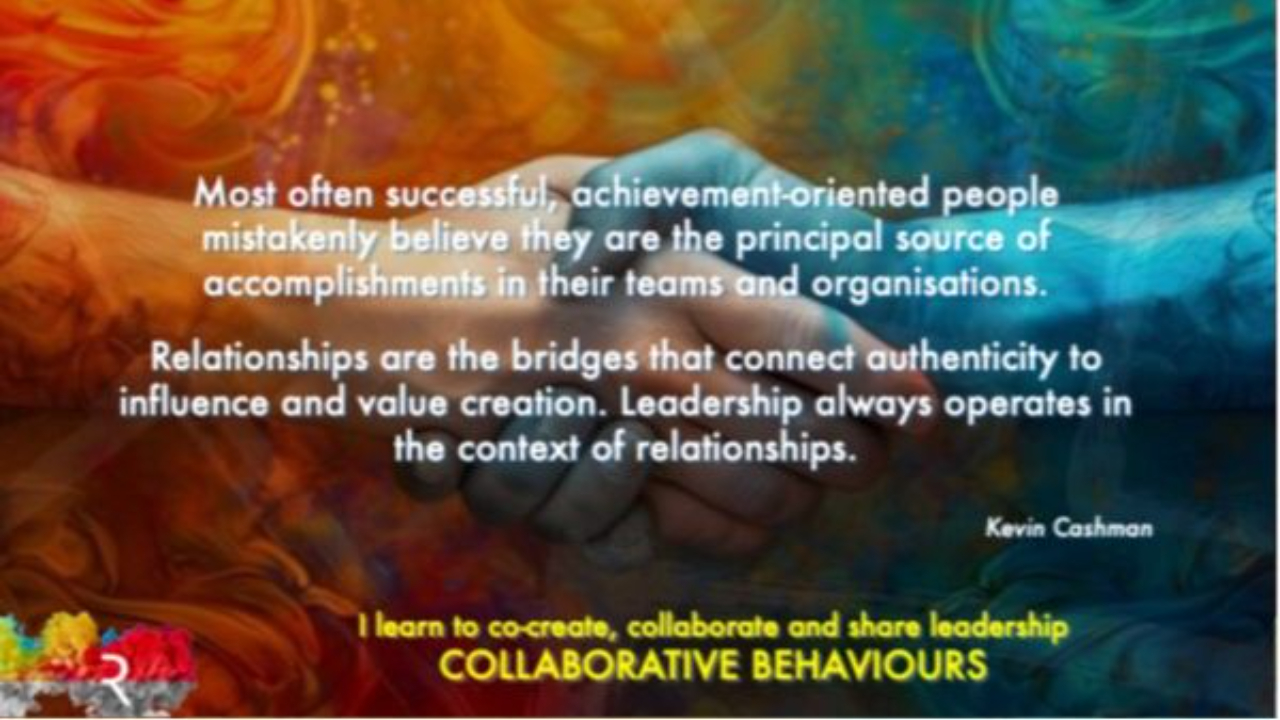
So far in this series, we’ve explored:
- Contextual intelligence (Blog 1): making sense of the world around us.
- Personal agility and curiosity (Blog 2): developing the world within.
- Ethical and moral maturity (Blog 3): leading with integrity in visible, high-pressure environments.
- Identity evolution (Blog 4): expanding who we are as leaders.
Now, in Blog 5, we turn outward to the collective dimension of leadership: collaborative and ecosystemic leadership.
Why Collaboration and Eco-Systems Matter in Complexity
Radical complexity cannot be solved by individuals or even by single organisations acting alone. The challenges we face cut across boundaries: climate, technology, supply chains, customer expectations, and social trust.
The old model of the leader as a solitary hero is no longer sufficient. Today, leaders must become connectors, bridge-builders, and conveners: creating value by mobilizing networks, partnerships, and ecosystems that span silos.
Too often, leaders are rewarded for individual performance rather than collective impact. But in complexity, the true measure of leadership is the ability to build trust, forge relationships, and deliver results together.
This requires setting goals and metrics not only for what leaders achieve, but also for how they collaborate:
- Do they build bridges across functions?
- Do they strengthen relationships externally?
- Do they make the whole greater than the sum of its parts?
Inside organisations, silos stifle innovation and slow response times. Outside organizations, insular strategies leave value on the table. The collaborative leader works differently:
- Customer-centric: starting with the lived experience of those we serve.
- Employee- and citizen-centric: designing with, not just for, the people impacted.
- Ecosystemic: seeing interdependencies across suppliers, partners, regulators, and communities and mobilizing them toward shared goals.
Practices for Collaborative and Ecosystemic Leadership
- Redefine success. Include collaborative outcomes in leadership goals and evaluations.
- Build cross-boundary forums. Create spaces where diverse groups can co-create solutions.
- Map your ecosystem. Identify the key actors—inside and outside—who shape your system’s success.
- Invest in trust. Relationships are built long before they are needed.
- Model partnership behaviours. Celebrate shared wins, not just individual victories.
A Call to Action
Complexity calls for leaders who are willing to break down walls, expand their view of stakeholders, and lead from a stance of connection.
Where do you see silos in your team, your organization, or your industry that you can begin to dismantle to create greater shared value?
Lorem ipsum dolor sit amet, consectetur adipiscing elit. Cras sed sapien quam. Sed dapibus est id enim facilisis, at posuere turpis adipiscing. Quisque sit amet dui dui.
Stay connected with news and updates!
Join our mailing list to receive the latest news and updates from our team.
Don't worry, your information will not be shared.
We hate SPAM. We will never sell your information, for any reason.
