
MINDSET AND PRACTICE SIX: Leading in Radical Complexity: Continuously learning and reskilling
Jun 12, 2026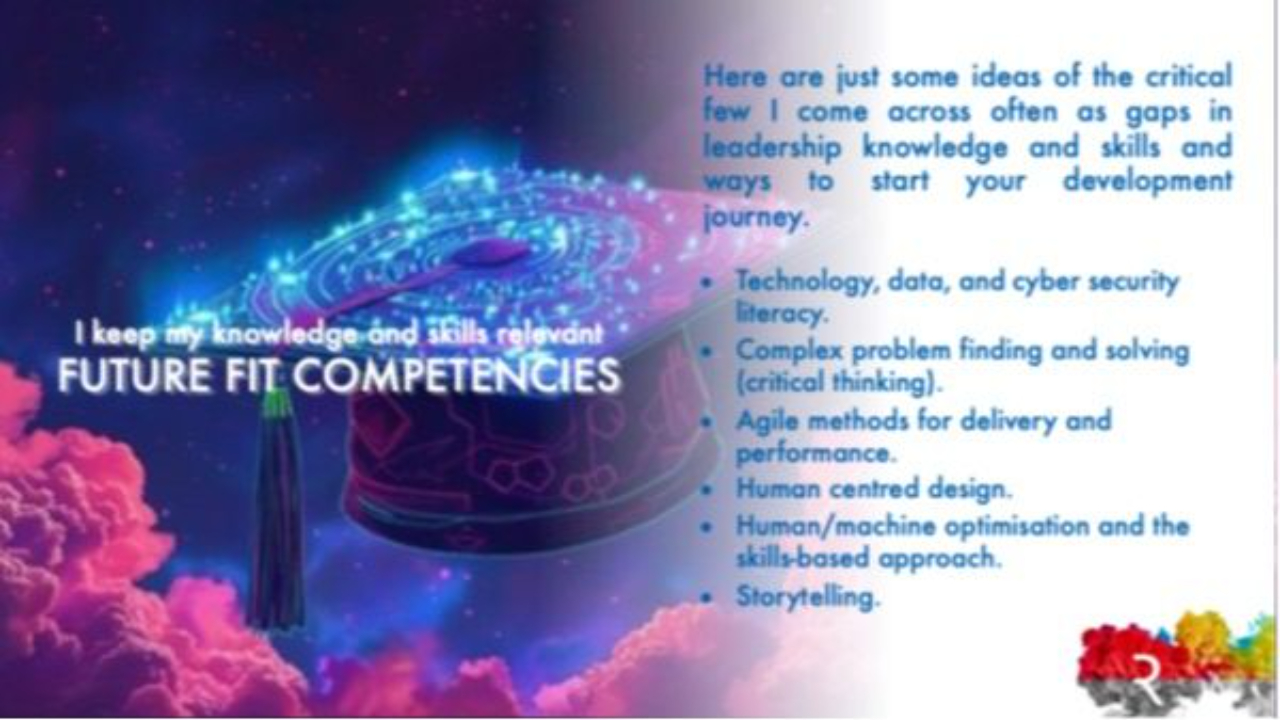
Over the past five blogs in this series, we’ve explored:
- Contextual intelligence: making sense of change (Blog 1)
- Personal agility and curiosity: leading the inner world (Blog 2)
- Ethical and moral maturity: role-modelling values (Blog 3)
- Identity evolution: growing into new stages of leadership (Blog 4)
- Collaborative and ecosystemic leadership: leading across boundaries (Blog 5)
Now, in the final blog of this series, we focus on the mindset that sustains all the others: continuous learning and sharpening of knowledge as the world changes.
Why Continuous Learning Matters
Your skills and methods are probably out of date. What have you learnt from 2014 when Industry 4.0 came in about robotics, AI, automation, quantum computing and other technology that completely changes work. What you have learnt since 2019 when we all started to work in hybrid and flexible work models? How well have you adapted to leading in this world? Are you reading about what skills are required in the future of work and ensuring you are building a skills based organisation and a flexible organisation design? Do you understand generational differences, climate issues, wellness and DEI? Have you built coaching and storytelling skills? Do you understand how to do adaptable strategy work? Or are you still using outdated models and approaches from the 90s and 2000s?
Leadership in radical complexity is not a destination: it is a journey of perpetual adaptation. What you learned in business school or your last leadership program may no longer be enough. The environment is evolving at speed, shaped by:
- New technologies: AI, cybersecurity, and automation
- New ways of working: hybrid, skills-based organisations, and platform models
- New expectations: from employees, customers, and citizens across generations
- New practices: coaching, storytelling, design thinking, and adaptive strategy
If you stop learning, you don’t just stand still, you fall behind.
The Continuous Learning Leader
Leaders who thrive in complexity adopt the stance of a lifelong learner. They stay curious, humble, and proactive, asking:
- What new ideas must I explore to remain relevant?
- What old assumptions must I unlearn?
- What skills and mindsets do I need to keep building?
They also model learning publicly showing their teams that growth is not optional, but essential.
Practices for Continuous Learning
- Build a learning portfolio. Intentionally mix technical knowledge (AI, cybersecurity) with human skills (coaching, storytelling).
- Experiment with new methods. Try design thinking workshops, adaptive strategy sprints, or peer learning circles.
- Schedule learning time. Protect time for reading, courses, or podcasts—just as you do for meetings.
- Learn from others. Engage mentors, reverse mentors, and cross-industry networks.
- Unlearn deliberately. Regularly examine: What practices or beliefs no longer serve me or my organization?
Why It Matters
Organisations can only learn as fast as their leaders. When you stop evolving, so does your team. Continuous learning is not just a personal advantage: it is a leadership responsibility.
A Call to Action
The world will not slow down for us. To lead well in radical complexity, we must continually expand our knowledge, refresh our skills, and adapt our mindsets.
What is one new skill, mindset, or area of knowledge you are actively learning today and what’s next on your growth agenda?
Lorem ipsum dolor sit amet, consectetur adipiscing elit. Cras sed sapien quam. Sed dapibus est id enim facilisis, at posuere turpis adipiscing. Quisque sit amet dui dui.
Stay connected with news and updates!
Join our mailing list to receive the latest news and updates from our team.
Don't worry, your information will not be shared.
We hate SPAM. We will never sell your information, for any reason.
