
MINDSET AND PRACTICE THREE: Leading in Radical Complexity: Moral and Ethical Maturity
Jun 12, 2026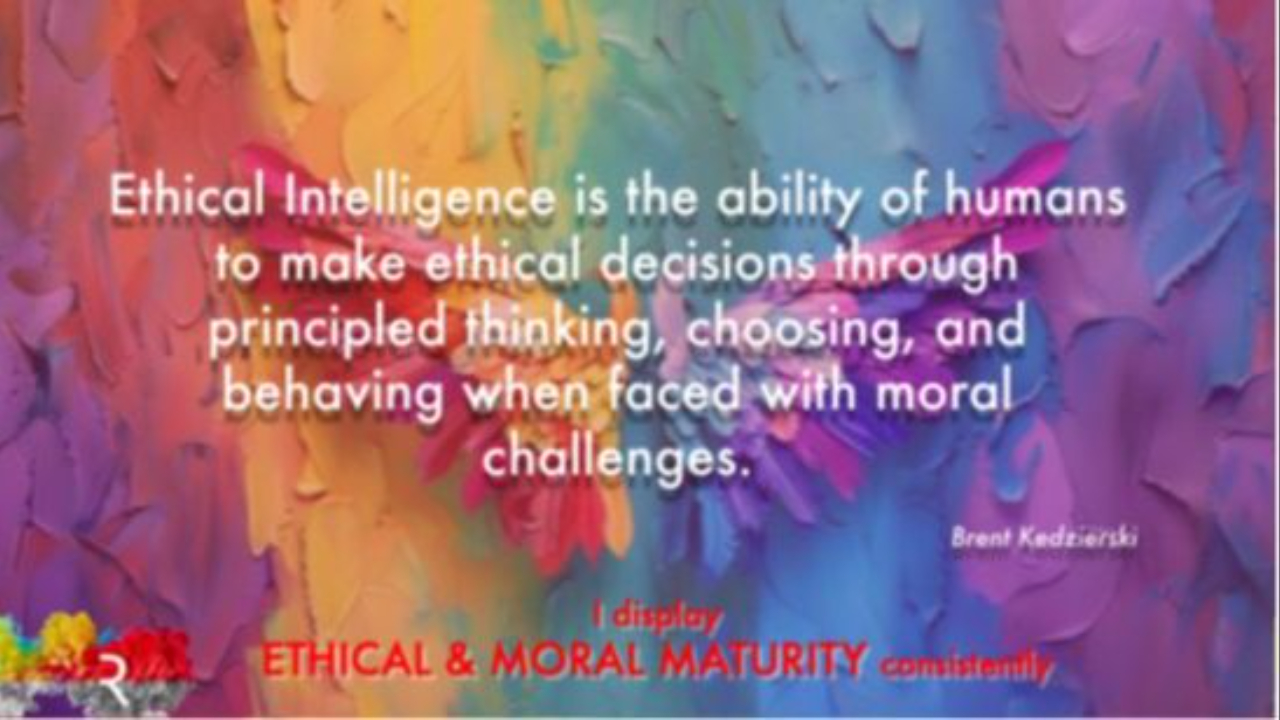
In Blog 1, we explored contextual intelligence: making sense of the world around us.
In Blog 2, we turned inward, focusing on personal agility and curiosity.
Now, in Blog 3, we shift to a leadership capacity that is both timeless and urgent: ethical and moral maturity.
Why Ethics Matter More Than Ever
Today’s leaders face unprecedented dilemmas:
- How should AI be used responsibly?
- How do we balance productivity pressures with the well-being of people?
- How do we uphold integrity in a world where every action is instantly visible on social media?
In a hyper-visible world, leaders’ behaviour is magnified. What you tolerate, you endorse. What you role-model, you legitimize. Teams and stakeholders notice not only your choices but also how you handle others who fall short of shared values.
Consistently aligning words and actions builds the trust that is essential for leading in uncertainty. Without trust, no amount of strategy, intelligence, or agility can hold an organization together.
In radical complexity, the answers are rarely simple. Yet how leaders respond and how they navigate grey zones, determines not only outcomes but also trust.
Ethical and moral maturity is not about perfection. It is about consistently aligning decisions and behaviours with deeply held values, and ensuring those values are visible in action.
Kohlberg’s Lens on Moral Development
Psychologist Lawrence Kohlberg outlined stages of moral development: from basic rule-following to higher levels of reasoning rooted in universal principles.
- At lower levels, people ask: What’s in it for me? or What will I get punished for?
- At higher levels, the guiding question becomes: What is the right thing to do, based on justice, fairness, and the common good?
Leaders must operate from these higher stages, because when complexity intensifies, rules are often incomplete, and the easy answers don’t suffice.
A Tool for Ethical Decision-Making: The Ethical Triangle
The U.S. military uses the ethical triangle as a practical guide for navigating moral dilemmas. It asks leaders to consider three perspectives:
- Principles (Rules and Duties): What do laws, policies, and codes of conduct require?
- Consequences (Outcomes): What are the likely results for stakeholders if we act one way versus another?
- Virtue (Character): What action aligns with the kind of leader and organisation we aspire to be?
By deliberately weighing all three, leaders avoid the trap of reducing ethical decisions to compliance checklists or utilitarian trade-offs.
Practices for Ethical and Moral Maturity
- Clarify your values. Write down the principles you will not compromise on, even under pressure.
- Use the ethical triangle. Before deciding, test your options against principles, consequences, and character.
- Name the grey zone. Acknowledge dilemmas openly; this builds transparency and shared learning.
- Role model visibly. Let your actions speak louder than your statements.
- Address breaches quickly. Silence in the face of misconduct erodes trust faster than mistakes themselves.
A Call to Action
Complexity demands courage: not only the courage to act, but the courage to act ethically. Leaders who model moral maturity send a powerful signal: that even when the path is unclear, the compass of values still guides the way.
What values and behaviours will you commit to role-modelling better, especially when the pressure to compromise feels strongest?
Lorem ipsum dolor sit amet, consectetur adipiscing elit. Cras sed sapien quam. Sed dapibus est id enim facilisis, at posuere turpis adipiscing. Quisque sit amet dui dui.
Stay connected with news and updates!
Join our mailing list to receive the latest news and updates from our team.
Don't worry, your information will not be shared.
We hate SPAM. We will never sell your information, for any reason.
